 ISSN: 1885-8031
https://dx.doi.org/10.5209/REVE.87973
Origen comunista del capitalismo estadounidense: cooperativas en la colonización del Oeste
Antonio Sánchez-Bayón[1]
Recibido: 3 de enero de 2023 / Aceptado: 27 de marzo de 2023 / Publicado: 1 de junio de 2023
Resumen. Revisión analítica de la versión positiva de la colonización del Oeste estadounidense, para clarificar el complejo proceso y comparar las experiencias. El marco teórico y metodológico procede de la Escuela Austriaca de Economía y los enfoques Neo-institucionales, aplicados a la disciplina Religión y Economía. La primer parte ofrece una visión de conjunto sobre las bases del movimiento cooperativo en Estados Unidos de América. La segunda parte supone una sistematización y comparación entre utopías religiosas e ideológicas en la frontera, como un tipo de empresas cooperativas de intención de vida en granjas y talleres, para mejorar el comercio y las conexiones a lo largo del país. Finalmente, se plantea un análisis de eficiencia y sostenibilidad entre las experiencias. Esta revisión pretende explicar la paradoja colonial de las utopías estadounidenses, por las últimas en establecerse, con mayor inversión inicial, fueron las primeras en quebrar. Este estudio rastrea el desarrollo de los Territorios del Oeste, desde el marco del Sagrado experimento de los cuáqueros y su apoyo a los experimentos de utopías en la expansión hacia Ohio, Indiana e Illinois. Esta revisión permite estudiar las utopías estadounidenses y compararlas, con una explicación sobre la paradoja colonial estadounidense. También ofrece casos históricos y reales de experiencias anarco-capitalistas.
Palabras clave: Capitalismo estadounidense; Anarco-capitalismo; Escuela Austriaca de Economía; Enfoque Neo-Institucionalista; Granjas comunitarias; Colonización; Cooperativas.
Claves Econlit: A12; B5; D02; J54; J61; K2; N3.
[en] Communist origin of American capitalism: cooperatives in the colonization of the West
Abstract. Analytical review on the Whig version of the American West colonization to clarify the complex process and to compare the experiences. The theoretical and methodological framework comes from the Austrian Economics and New-Institutional Approach, applied in the cross-discipline Religion & Economics. First part offers an overview in the bases of the cooperative movement in The United States of America. Second part is a systematization and comparison between the religious and ideological utopias in the frontier, as a kind of cooperative enterprises of intentional life in farms and workshop, to improve the commerce and the connections across the country. Finally, there is an analysis of efficiency and sustainability among the experiences. The review pretends to explain the colonial paradox of American utopias, because the last established, with more initial inversion, they were the first to fall. This study shapes the development of the Western Territories, from the Quaker´s Holy Experiment framework and its support for the utopias experiments in the expansion to Ohio, Indiana and Illinois. This review allows to study the American utopias and to compare them, with an explanation for the US colonial paradox. Also, it offers historical cases of anarcho-capitalism experiences.
Keywords: American capitalism; Anarcho-capitalism; Austrian Economics; New-Institutional Approach; Communitarian farms; Colonization; Cooperatives.
Summary. 1. Introduction: consensus, conflict or cooperation?. 2. Review of theoretical and methodological frameworks. 3. American utopias systematization: religious and ideological enterprises. 4. Cases systematization: religious and ideological enterprises. 5. Results, discussion and conclusions. 6. References.
How to cite. Sánchez-Bayón, A. (2023). Communist origin of American capitalism: cooperatives in the colonization of the West. REVESCO. Revista de Estudios Cooperativos, 1(144), e87973. https://dx.doi.org/10.5209/reve.87973.
1. Introduction: consensus, conflict or cooperation?
How is possible a communist origin of US capitalism? Are there other communist experiences before the socialist interpretation? Have there ever been historical experiences of anarchocapitalism? What are the American utopias in the frontier? What is it the American colonial paradox? What is the dynamic force in the US History? Consensus, conflict or cooperation?
The Whig version of the US History, based in the national consensus, it was revised and switched by the critical historians generation (Hofstadter, 1946, 1967 & 1970; Wright Mills, 1948; Lipset, 1968), later by cultural historians of identity (Takaki, 2002 & 2008. Zinn, 1980 & 2004), and currently for woke historians (Beckert & Desan, 2018; Beckert & Rockman, 2016; Schermerhorn, 2015; Wright, 2020). The official version was moved from a golden view based on consensus and citizenship, to a critic view based on conflict and minorities. To try to rebuild the former consensus, Huntington (2004) offered a revival of the American melting pot (Parrington, 1927), but without much success although there was no current common ground (Lilla, 2017; Fukuyama, 2018; Sánchez-Bayón, 2019a-b). For this reason, this review goes back in US History of the 19th century, at the begging of Social History in the time of construction of the country, to find the common ground lost and the force of progress: it was the period of reconciliation after the Civil War, and the expansion to the West, to connect both coastlines in the USA. Then, there was a minimal State and entrepreneurship came from private initiatives, like religious and ideological enterprises or anarcho-communist utopias (Bestor, 1950; Fogarty, 1980 & 1990; Berry, 1992). The originality of this study is based on: a) the use of the primary sources of journalists who visited the American utopias (Nordhoff, 1875; Hinds, 1878 & 1908); b) the analysis of efficiency and sustainability among these utopias, with an explanation about why some of them are still alive (religious enterprises, i.e. Amanitas and Whirlpool, Mormons and Marriott), and others collapsed in the first years (ideological enterprises, i.e. Icarians in Nauvoo, Owenites in New Harmony); c) the application of mixed heterodox economic approaches (i.e. Austrian Economics, New-Institutional Approach from New Political Economy: Law & Economics, Public Choice, Constitutional Economics), in the way of economic mainline (Boettke et al., 2016; Sánchez-Bayón et al, 2022).
2. Review of theoretical and methodological frameworks
To analyze the efficiency and sustainability of the American utopias (the first cooperatives in the US West), it is used the following academic toolkit:
a) Austrian Economics began its trajectory with the Methodenstreit or dispute on the method (Menger, 1883; Mises, 1929 and 1933; Huerta de Soto, 2000. Hoppe, 1995). It offers the Mises theorem on the economic calculus (or the economic impossibility of socialism, Mises, 1922, 1929, 1933 & 1944), reviewed by Hayek (1944 & 1988), and extended to every institutionalization of coactive and centralized interventionism, according to Hoppe (1989) and Huerta de Soto (1992). The corollary of the Mises theorem is the Buchanan-Tullock theorem of Public Choice and the Unfinished Agenda (see next point). Other key idea is Hayek thesis on spontaneous order, favorable to social evolutionary institutions (Hayek, 1952a, 1952b & 1988).
b) Anarcho-capitalist approach is based on the contributions of the American Individualist Anarchism, a philosophical movement with prestigious members as Warren and Tucker (mutualists), Rev. Emerson and Thoreau (Transcendentalists), Rev. Greene (Unitarian and defender of free banking), Andrews and Heywood (abolitionists), Walker (philosopher of egoism) and many others, such as Lazarus, Robinson, Labadie, Byington, etc. (Madison, 1945; Martin, 1953; McElroy, 1981). This heritage is attended by Austrian Economics (Rothbard, 1973; Veysey, 1973) and Public choice (Tullock, 1972 & 1974). In the USA, the first anarchism tradition came from the religious movement that rejected the supremacy of the civil power over religion, and defended the wall of separation between Church-State (i.e. Anabaptists, Baptists, Quakers. Stokes, 1950; Pfeffer, 1953 & 1958). In the 19th century, philosophical anarchism began (i.e. American Individualist Anarchist), and finally political anarchism, close to socialism, emerged (Noyes, 1870; Hillquit, 1903). In epistemological terms, this trend is based on Rothbard axiom and the principle of the farm or homestead, related to the appropriation of land by their workers (Rothbard, 1973). In methodological view, it follows the idea of freedom of research. Anarchism researchers reject formal positivism where a hypothesis must be confirmed, as they prefer to search for truth than to confirm it (Feyerabend, 1975; Escohotado, 2008-16).
c) New-Institutional approach (from New Political Economy) is based on Law & Economics and the Coase theorem on the firm and costs of transaction (Coase, 1937 and 1960). Public choice offers the Buchanan-Tullock theorem about interventionism, which means the end of political romanticism and the idea of a paternalistic state. There are many power games affecting all the decisions with externalities or collateral effects like rent-seekers, log-rolling, crony capitalism, omnibus regulation, unfinished agenda, etc. (Buchanan & Tullock, 1962; Anderson, 1986). Constitutional Economics is based on the Buchanan theorem about the relevance of the rules (Brennan & Buchanan, 1985; Buchanan, 1986, 1987 & 1990). Cliometrics offers empirical remarks, such as Fogel´s studies of the real impact of technology in the development of the US (railway industry was less than 2% of GDP in the 19th century, but, in contrast, the religious factor was more relevant, Fogel, 1964 & 2000. Fogel & Engerman, 1974).
The state of the art differs from the usual (based in the review of current bibliography), given the novelty approaches and frameworks mix here (there were some sectorial incursions with this focus, related with the Far West, such as Anderson & Hill, 1979 & 2004; Veysey, 1973). This research started with a bibliometric study of the scientific production in Religion and Economics (see next) linked with the subject (West American colonization), to drawn up a thematic and journal map (see Figure 2). In this way, it was possible to select the main secondary sources for the study of the American utopias: colonies based on communal and cooperative enterprises (Wooster, 1924; Tyler, 1944; Bestor, 1950; Cohen, 1973; Fogarty, 1980 & 1990), plus its later revival and revision (Berry, 1992; Kephart, 1998; Friesen & Friesen, 2004; Curl, 2012), completed with a multitude of encyclopedic contributions and compilations on socio-religious life in the USA (Lippy & Williams, 1998; Mead, 1985; Melton, 1989; Menéndez, 1976; Noonan & Gafney, 2001; Olson & Djupe, 2003; Queen et al., 1996; Smith & Jameson, 1961). Subsequently, the revision has been refined, contrasting with primary sources such as the epistles or letters among the Owen Sr. and Jr. and Rapp (digitized by the Indiana Historical Society), with Cabet and Smith (digitized by the International Institute of Social History). Other contrasting sources have been the journalist publication of several travelers around the American utopias at that time as Noyes (1870), Nordhoff (1875), Hinds (1878 & 1908) or Hillquit (1903).
All those analysis tools have been incorporated to Religion & Economics (R&E), mixed with other tools from Cultural Studies: religious & frontier factor (awakenings & revivals cycles), denominalism, social gospel, American covenant theology, staple approach, utopias input method: arcadianism, anarchism, millennialism, moral reform programs, etc.
The academic subject of R&E comes from Church-State Studies in the 70s (Stokes, 1950; Pfeffer, 1953; Wood, 1961; Sánchez-Bayón, 2014a & 2019a). During the cultural wars (Walsh, 2000. Yarnold, 1999 & 2000), the discipline was divided in two sides: a) the consensus line, with studies in ecumenical relations, denominalism and competition, etc.; b) the critic line, with attention to minorities’ issues and discrimination, inequality, etc. Since globalization, there was a revival of the discipline, but with another title: Economics of Religion (promoted by the Cultural Economics approach, with attention on its relations to growth and development, alternative modes of production, happiness management, etc.). There are several think-tanks in this discipline (i.e. Institute for the Study of Religion, Economics and Society at Chapman University, under the direction of Prof. Iannaccone, and related to the Association for the Study of Religion, Economics, and Culture, Penn State University, John Templeton Foundation, etc.). Currently, there is a recovery of the original name, with initiatives such Religion & Economics Collection in The Quarterly Journal of Economics, supported by Harvard and Oxford University, as well as more than fifty specialized journals, i.e. The Journal of Economics, Management and Religion, Journal of Economics, Theology and Religion. Journal of Economics, Theology and Religion. Journal of Markets & Morality. Faith and Economics. In Figure 1, a bibliometric study on religion-economics relations (topics & journals) is shown, and the complex web of academic links is made evident.
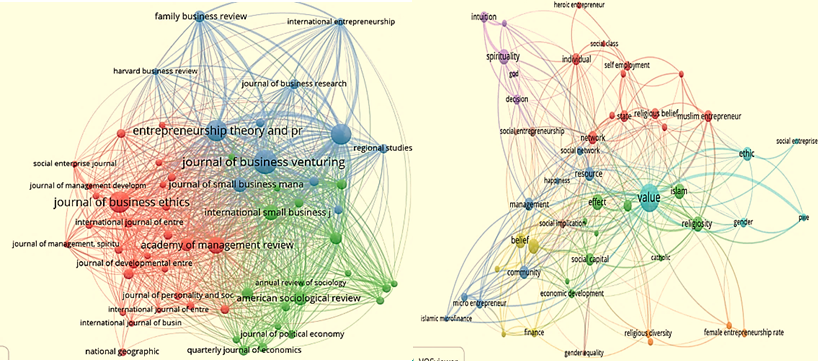
Figure. 1. Bibliometric study on religion-economics relations (Block et al, 2020).
3. American utopias systematization: religious and ideological enterprises
The American utopias or anarcho-capitalist experiences selected here were commercial enterprises (as cooperatives) to finance the corresponding community farms, in which is shared the ownership of production factors, the good and the profits. In Figure 2, the map of these utopias in the 19th century US is illustrated. Despite the fact that all of them coincide in being alternative socio-economic models to the state, and supposedly founded to achieve greater freedom, they nevertheless begin to fail in the property and entrepreneurial function due to the excesses of community centralization, as well as the tendency to polylogism and determinism (Mises, 1957), which reduces the counterbalance of free-ownership and the entrepreneurial function. The first experiments to show non-functionality and entropy were the socialist utopias due to the aforementioned theorem of economic impossibility, but then they are followed by intentional communities of another type (i.e. brotherhoods, intellectual farms, farmers' clubs), until reaching the religious community farms (surviving only the autochthonous ones and for not economic, but religious reasons. By the way, this same problem arises in other parts of the world, as soon after will happen with the kibbutzim/kibbutz or Zionist community farms to build the State of Israel, in 1909.
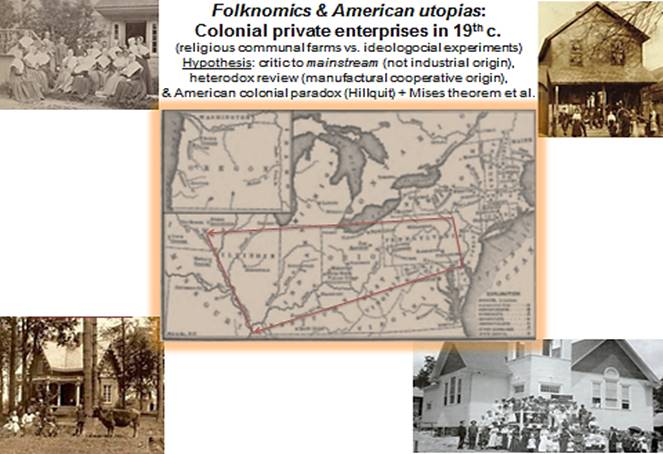
Figure. 2. Utopias Map of 19th century in the USA (Nordhoff, 1875).
4. Cases systematization: religious and ideological enterprises
The following clarifications must be made to set a demarcation criterion to select which cases should be dealt with within the coordinates of the study (spatial point: the US West, from Pennsylvania to Ohio, Indiana and Illinois; temporal point: 19th century, during the Second religious revival and between the first and second industrial revolution in US; material point: commercial enterprises of community farms –the origin of the corporations- that contributed to the articulation of the country) and clarify the thesis of the article, the study the American communist origin and the viability of anarcho-capitalist experiences as an alternative social and economic model (Sánchez-Bayón, 2022).
– Movements, regardless of whether they are more or less religious or secular, must be based on the basic principles of anarcho-capitalism, such as respect for freedom and property, non-aggression and reciprocity, solidarity and communal pacts. These principles fit perfectly with the values of the Quaker, and, so, we start from their Holy Experiment (see Pennsylvania Frame of Government, 1682). The dissident and millenarian sects, as well as the ideological utopias required to be colonized the previous step of paying the fee for access to the land and the commitment to be productive.
– The taxonomy established for the exposition and explanation of cases is based on the chronological order, their degree of notorious rootedness and the number of resources and factors of production they exploited (from larger experiments to smaller ones according to the use of traditional factors of production: land -available assets-, labour -number of members of the community- and capital –higher-order goods that were accumulated, together with the savings generated). In this sense, we have followed the criteria of the professors of Political Economy of the time (such as the aforementioned Cairnes, 1874), who recognized that the boom of the 19th century communitarian experiments in the USA was due, above all, to European immigration without access to land in their countries of origin, together with the errors of employers and unions on the Atlantic coast (placing obstacles to employment), which made the entrepreneurial adventure of financing a communal farm in the West attractive (whose land price was affordable).
– Another issue to take into consideration (which connects the previous ones), is that all the experiments coincide in that their members seek greater freedom and prosperity, and they resort to the use of time via "communitarian" farms, which were not "communist" in the later ideological sense (such as socialist). In any case, at least in the initial experiments, they would be "communists" of a religious (that is, communitarian) nature. They stress the existence of a life in common and maximum solidarity to ensure the subsistence of the sect, but taking into account that then each one was responsible for his own salvation). Moreover, this communitarianism was a forerunner of later cooperativism, since the means of production were shared, but also the profits.
The selected cases are showed chronologically (from the pioneers to the most recent ones) and according to types of experiments or utopias (religious, secular and ideological experiences, each one with more than six kinds of subcategories: movements, farm projects, etc. Sánchez-Bayón, 2022).
American utopias synthesis (private colonizing companies –most of them coop.- in US West during 19th c.):
1) Religious enterprises (2 blocks & 16 types): reformed communities (not Calvinists or Lutherans –many central coactive planning); they were the first cooperatives established, with less initial investment, more profits and long-life companies.
a) Transplanted communities: dissident sects, perfectionists and millenarians (10 types, pioneers in the West colonization from 1812): Dunkers (10 societies/cooperatives with 500 members aprox.), Shakers [15 soc./coop. with 5.000 members aprox.], Rappities [5 workshop-towns with 900 members], Amanitas [7 soc./coop. with 2.000 members], Zoarites (5 soc./coop. with 300 aprox.), Aurorites-Bethelians (2 soc./coop. with 300 aprox.).
b) Native communities (6 types, from 1810s until now): Christian Perfectionist & Universal Friends Soc. (6 soc./coop. with great leaders as Gore or Noyes); Christian Restorationists & Jehovah's Witnesses, Mormons (many soc./coop., until now).
2) Secular experiments (4 types, 1840s, short-life: less than one year): social laboratories and intellectual communes (linked with American Civil Religion), i.e. Unitarians, Transcendentalist (main soc.: Brook farm vs. Fruitlands), Pragmatics (many clubs), Intentional and fraternal communities linked with American Individualist Anarchism-AIA).
3) Ideological companies (3 sets & 18 types, 1820-1880): they were the last established, with more initial investment, the first broken and short-life (no more than three years).
a) Ethnical-nationalist collective utopias (6 types, 1840-80s): Danish Socialist Colonies, German Reformed Colonies, Swedish Bishop Hill Colonies, Jewish Am Olam, etc.
b) Socialists (6 types, 1840-60s): Icarists (main soc.: Nauvuu & revivals), Owenites (main soc.: New Harmony/Oberlin & revivals), Fourierists (main soc.: Brisbane & 40 phalanxes), Fabians & Christian socialist, etc.
c) Mixed (6 types, 1840-80s): Georgists, AIA (i.e. Warren: Utopia & Modern times), experimental communes (Nashoba, Free Lovers, etc.), grangers–masons, vegans communities…fraternities-masons
Figure. 3. American utopias synthesis (own elaboration).
4.1. Communal religious experiences: dissident sects, perfectionists and millenarists
Applying these contributions to the historical interpretation of how all these influences arrived in the USA, extending via the Quaker Holy Experiment of Pennsylvania, and attending to the initial systematization of those who visited in person these communities or the heritage of their settlements, the following classification and cases should be considered.
a) Transplanted traditions:
The religious Society of Friends or Quakers, still Christian, but without dogmas or hierarchies, they were persecuted in Europe. For this reason they were among the first to arrive in the North American colonies, but they were expelled from New England, dispersing then to the Caribbean and the Middle Provinces. To secure territory of their own, they acquired West Jersey in 1677. Their leader, Fox, travelled to America, later exploring and buying land in East Jersey in 1682. Meanwhile, King Charles II of England found that the more Quakers he punished, the more they converted, so he decided to get rid of the problem by paying off an old royal debt (incurred during the civil wars) to Admiral Penn, father of William Penn. So, in 1681 he granted the Penn family the possessions of New Castle and beyond (present-day Delaware and Pennsylvania), renaming the territory Pennsylvania (in honour of the elder Penn). Then, more Quakers landed there (making the Penn family the largest private -not royal- landowners, with more than 45,000 square miles or 120,000 km2). In 1682, it was passed the Pennsylvania Frame of Government (which would inspire the Declaration of Independence and the U.S. Constitution, with its Bill of Rights), setting in motion a whole utopia of liberties and participatory government, which was known as the Holy Experiment (because of its multi-denomination, respecting the confessions already established there). Since the Quakers were very industrious (in only six months they had parceled out more than 300,000 acres), they wanted to attract talent to their territory, opening the colonization to other denominations, but the new citizens had to acquire at least twenty hectares (at a symbolic price of approximately one pound, but enough to end up buying a shipping company that would connect America and Europe). Therefore, constituting such an amount could be assumed with the family savings of the time, thus changing the rules of the game: mercantilism was abandoned, whereby only large companies could exploit the colonies on behalf of the King, and thus also put an end to the infamous indentured servitude, to cover the journey there. In Pennsylvania they wanted free and enterprising people. Between the end of the 18th century and the beginning of the 19th century (with the Second Great Awakening), more than ten new denominations arrived, initiating more than double of projects, putting into production several farms and soon also workshop cities (like the one Rapp sold to Owen, see ideological enterprises).
Let us now look at some of the specific points to these denominations, which had in common being persecuted for being dissidents, having a perfectionist vocation and, so, being very industrious:
– Dunkers (also called German Baptist Brethren or Church of the Brethren) refer to Central European immigrants from religious minorities such as some Anabaptists, part of the Amish, etc., dissidents from Catholicism, Lutheranism and reformism. They founded their first community farm in Pennsylvania (with the women's buildings separated from the men's), called the Ephrata Community or Cloister in 1732, which was registered as a joint-stock company since 1812 and nowadays declared state cultural heritage. It was followed by the Snowhill Community (1800) and many others, and from these communities they spread successfully towards the West.
– Shakers or the jumpers – so named due to their ceremonial - which actually constituted as a Society unit of believers in the second coming of Christ. They arrived in Pennsylvania in the decade 1780s and were nicknamed the quaking Quakers by their ritual dances. They were also the most egalitarian between men and women (with a proactive role for women), highlighting the foundational work of communities of Jane Wardley, Mother Ann Lee or Mother Lucy Wright (who ran orphanages and shelters at the time). In the 19th century there were about 4,000 believers distributed in more than 20 main communities and many other small-family communities. They were tremendously industrious (and inventors of utensils), since they considered that work redeemed them and improved them as people. Nowadays, their settlements have also been declared part of the state´s cultural heritage or converted into museums.
– Rappities (named after its founder, Johann Georg Rapp, although the official name was Society of Harmony) was a split from Lutheranism and persecuted but it. They arrived in the US in 1803 because the Quaker shipping company took pity on them and financed their trip given their very poor situation. They moved the headquarters of their society to Pennsylvania in 1805 (lasting until 1905). As a pietistic group, it had many similarities with those previously mentioned, so coexistence was easy. This group recomposed itself in two years’ time, reached 400 members and began to make its speciality: the foundation of workshop-cities, such as Harmony I (in Pennsylvania), Harmony II (in Indiana), New Harmony (also in Indiana and sold to Owen, for 135,000 dollars -when the land had cost him not even 300 dollars-, so that he could try his experiment of utopian socialism), Economy (actually Old Economy Village, in Pennsylvania, characteristic for its furnaces and where Rapp died).
– Amanitas, whose denomination comes from the biblical book Song of Songs and means to keep honest, and its official denomination was the Society of Amana, like the Rappities, were much persecuted in Germany, arriving in Pennsylvania thanks to the charity and compassion of the Quakers, who not only defrayed their trip, but gave them almost twenty dollars so that they could start their journey. Their industriousness and thrift proved even more formidable than that of the other sects, as they were fewer and had come under worse conditions. In a couple of decades they had accumulated a patrimony of nearly a million dollars. As they knew how to adapt to industrial capitalism, their project continued, -something that other communities did not manage to do-, giving way to Amana Refrigeration Inc., and later Whirlpool corporation.
– Religious communal society (well-known by their main communes/cooperatives members: Aurorites and Bethelians), it had as a founder a young Prussian Lutheran, William Keil, who emigrated to America, settling his family in Pennsylvania. He participated in the New Harmony experiment (both with the Rappities and Owen, until its dissolution), and then went on to found his own communes: Bethel (Missouri) and Aurora (Oregon). His society combined Lutheran, Pietistic and Methodist elements, fused and based on the golden rule (or reciprocity): treat your neighbour as you wish to be treated. Keil was known for his enthusiasm and for being a healer. He died in 1873 and the society was dissolved in 1883.
b) Native experiments
This section deals with the experiments of the new sects, which, as a result of the Second Great Religious Awakening, are moving from being mainline churches or hierarchical churches of European origin, to become evangelical churches or autochthonous community churches, until reaching very singular expressions and almost outside Christianity (by secularizing it and transforming it in their own way), such as the Mormons, Jehovah's Witnesses, scientific Christians, Scientologists, etc. In these cases we are no longer dealing with pietistic movements, in which industriousness and thrift as signs of predestination for salvation take precedence, but with enthusiastic groups, oriented towards the community and its solidarity, with very striking social experiments for the time (i.e. complex marriages or polygamy):
– Perfectionist Christians is an evangelical branch based on the Presbyterianism of its founder (Rev. Finney), combined with Methodism (in vogue with the Second Great Awakening), and which seeks sanctification through a life dedicated to love. Noyes (considered as an American utopian proto-socialist), influenced by Finney, studied theology, and became a preacher, although his license was revoked when he declared himself perfect and sinless in 1834). Thanks to his great charisma, he managed to convince hundreds of people to join his Society of Free Love and its several communities: a) Putney Community (Vermont in 1836), begins as a Bible school, but given the persecution of the authorities (arresting Noyes several times), finally had to move to New York; b) Oneida Community (New York in 1848-1881), is the most important and best known of all, becoming the epicentre for the rest of the communities; c) Communities of Wallingford (Connecticut), Brooklyn (New York), Newark (New Jersey), Cambridge and Putney (Vermont), plus the community of Niagara Falls (in Ontario, Canada), where Noyes finally fled to avoid further arrests. This communal social experiment grew to some three hundred members, who supported themselves through thriving industries (i.e. silk thread production, animal traps, leather handbags, palm leaf hats, fruit and vegetable cultivation and, above all, silverware).
– Society of Universal Friends had as a founder a Quaker from Rhode Island, Jemima Wilkinson, who claimed to have suffered a serious illness in 1776, eventually dying and resurrecting as a genderless evangelical recalled Gore or the public universal friend. He referred to himself in a non-binary manner and dressed in an androgynous manner. Taking advantage of the Revolutionary War and with the help of his brothers, he preached the end times, claimed the end of slavery and defended free will. He managed to have a hundred followers, founding two settlements: a) Gore -the Friend- (in New York, in 1790 and by 1792 he had 25 families and a farm); b) Jerusalem (also in New York and where the Friend's Home, now part of the state cultural patrimony, still stands). The founder died in 1819, but his communities continued until the 1860s.
– Christian Restorationists and Jehovah's Witnesses are also important. The restorationists seek to return to the origins of Christianity, and many of them, in addition, are millenarianists, defending the transformation of the world and the second coming. From among the restorationists, the Bible students' movement founded in 1870 by Charles Taze Russell, who also founded the Watchtower Tract Society of Zion/Zion (Jerusalem), arose in Pennsylvania. Thus, they began a lucrative business of distributing religious literature, which, upon Russell's death, was spun off. Joseph Franklin Rutherford retained control of the society, re-founding it in 1931 (to differentiate it from other Bible study groups) and renaming it Jehovah's Witnesses. Currently it has almost nine million adherents involved in evangelization, and thanks to donations and religious literature, it is one of the richest corporations in New York, turning over some nine hundred and fifty million dollars a year.
– Mormons (officially, Church of Jesus Christ of Latter-day Saints) is a sort of syncretism, which unites Christianity (of an evangelical restorationist nature) with other religions (including pre-Columbian and Egyptian hermetic religions). Its denomination (Mormon), comes from its scriptures, the Book of Mormon, who was a Nephite prophet and later angel who appeared to the founder, Joseph Smith, to show him the book so that he could translate it. Smith began preaching in the 1820s in New York, as a restorationist, and since the 1930s, as a Mormon. In their mission to establish the kingdom of God on earth, the Mormons carried out several foundations: 1) Attempted settlements and expulsion with persecution (due to misgivings about their polygamy and other practices that scandalized at the time): Palmyra (New York), Kirtland (Ohio), New Jerusalem or City of Zion (Missouri). 2) Purchase of the city of Commerce (Illinois), renaming it Nauvoo (there was peace and prosperity until Smith was killed by a mob in 1844). During this period, the Mormons had a relationship with Cabet's Icarists. 3) Under the direction of Brigham Young they went to Utah (as a promised land) and they founded Salt Lake City, until the date.
4.2. Experiences of American civil religion: social laboratories
This section is very complex, based on American Civil Religion-ACR (Bellah, 1970 and 1975). It is one of the points that requires greater depth, so as a research plan, here advanced, we can only offer now a preview of the contents:
a) Unitarists: they seek the union of Protestant churches, especially the incipient evangelical ones, as an element of autochthonous integration, giving rise to intellectual communities in Ivy League universities, where they are strong at the time (in the 1790s and 1800s);
b) Transcendentalists: this is an indigenous current of thought, which gives rise to intellectual communes such as Brook Farm and Fruitlands;
c) Pragmatists and intentional and fraternal communities: properly American, they include social experiments such as Social freedom community, Hopedale Community (Practical Christianity), Skaneateles and Prairie Home Community (Society for Universal Inquiry), Brotherhood of the new life, Colonies of Anaheim (California)-Vineland (New Jersey)-Silkville (Kansas), New York Experiments.
4.3. Utopian Ideological Experiments
As a result of the greater American secularization, and the problem of management of immigrant multitudes, the ideological question, with its nationalist, socialist and mixed variants, is finally present in the US. As in the previous case, only a preview of the contents can be offered for now.
a) Nationalists: There are two lines of research on this issue. On the one hand, to verify whether most of the evangelical communities that emerged after the Second Great Awakening (since 1790), being autochthonous, have a certain North-American or patriotic nationalist component (as opposed to the main-line churches, which do have a foreign origin, responding to foreign leaders, as in the Anglican case). On the other hand, other immigrant communities with State Church maintain this nationalism with their metropolis and hence the tendency to isolation, to keep their original traditions, as in the cases of Danish Socialist Colony (in Kansas), German Reformed Colonies (in Texas), Bishop Hill Colony (of Swedes in Illinois) or Am Olam (with Jewish agricultural communities all over the country - as a forerunner of the kibbutz). Another line would be that of the Georgist movement (because of its inspirer, Henry George and his work Progress and Poverty of 1879), but given its relations with socialism, perhaps it must go to the mixed block.
b) Socialists: There were many communities of utopian socialist inspiration in the second half of the 19th century. They can be classified as follows:
- Icarians: denomination by the book Journey to Icaria (1839) of the Frenchman E. Cabet (with egalitarian approaches from masonic view), who moved to the US in 1848, helping to promote Icarians communities in other regions, such as Louisiana, Texas, Iowa, Missouri, California, etc. In the West, Nauvoo (in Illinois) stands out for being a shared project with the Mormons (until the lynching of Smith and Young's decision to immigrate to Utah).
- Owenites: they receive their name from their inspiration, the paradoxical industrialist and utopian socialist R. Owen (he was the first to generalize the term "socialist", in 1827, to refer to his project of a new society with opportunities for all). He had the support of Dale (Chief Executive of the Royal Bank of Scotland -and his father-in-law-) and Bentham, to finance the New Lanark project (a large factory, with social innovations, such as a nursery), intending to repeat it and extend it to a whole city in New Harmony (Indiana). The project failed because of: not having selected well the workers (he hired almost a thousand unqualified workers); having left his son in charge that surrounded himself with intellectuals without practical experience with many difficulties in obtaining more financing (in special, due to the economic situation at the time), etc. The fact is that Owen lost 4/5 of his fortune, while the four New Harmony newspapers (financed by him) accused him of being a speculator (for not having risked 100% of his patrimony). Such was the nonsense, that only visiting the facilities in person, the situation could be fixed. Rapp recalled how sad he was when he returned to New Harmony to complete the economic transaction, and in less than two years, the city had been left to deteriorate: "they hadn't even re-roofed it", he lamented to himself. Based on the postulates of Owenite utopian socialism, there were other experiments: a) Oberlin Colony in Ohio (1833-43), led by J.J. Shipherd (and eight families); b) Kristeen Community in Indiana (1845-47), led by C. Mowland, who had ties to the Oberlin Colony. Mowland, who had links with the Universal Search Society (see below); c) Fruit Hills in Ohio (1845-52), led by the anarchist O.S. Murray, who had links with the Kristeen community; etc.
- Fourierists: the reception of the postulates of the French utopian socialism (or rather, mutualist), gave rise to the constitution of the American Fourier Society with its network of communities or phalansteries (in English phalanx or phalanges). The following are worth mentioning (following the order of Noyes and Nordhoff): Trumbull phalanx, Ohio phalanx, Clermont phalanx, Integral phalanx, Alphadelphia phalanx, Clarkson phalanx, Sodus Bay phalanx, Grange phalanx, Wisconsin phalanx, North American phalanx, etc. Even, other minor and independent experiments may be mentioned, such as Spring Farm Colony (in Wisconsin, 1846-48).
- Fabien’s: allusion is made to underground socialism in universities, mass media, think-tanks and Public administration, which in the case of the United States began via Christian socialism, more specifically, by agents such as the Rev. W.D. Porter Bliss, in the 1890s, who did carry out some attempt at communal experience. Subsequently, its development was limited to the academic and administrative sphere, with the formation of the American Fabien movement, as well as the multiplicity of Fabien societies at the universities (i.e. Harvard Fabien Society with members such as Stuart Chase, who helped design the New Deal).
c) Mixed: those experiences that intermingle both ideologies (such as Georgism, vid. infra), or directly that sort of miscellaneous, where spiritualist and free love movements, such as the Nashoba communes (in Tennessee, 1825-1828, led by F. Wright), Free Lovers at Davis House (in Ohio, 1854-58, led by F. Barry), etc., are taken into account. Even sui generis cases may be mentioned, such as Sylvania Association, Yellow Springs Community, Seven Epitaphs, Marlboro Association, Northampton Association, etc. It is worth mentioning the openly declared case of libertarian socialism, the case of the New Philadelphia Colony (in Pennsylvania, 1832-33, led by B. Müller). Also curious are the Grangers or local corporations of small rural landowners and Masons; even the cases of vegetarian living communities, such as Octagon City (Kansas) or Shalam Colony (New Mexico).
5. Results, discussion and conclusions
According to this systematization, in the colonization of the American West, there were the following utopias or socio-economic experiences of cooperative enterprises in the frontier (essays of way of life and improvement in production and welfare):
a) Religious enterprises: most of them started in the Holy Experiment expansion to the West (the colonization of Ohio and Indiana) during the Second religious awakening until the Second industrial revolution (1790-1880). There were 10 types of renewal movements transplanted from Europe, with experiences of several families, growing in farms and workshop towns of thousands people. The most relevant cases were the Rappities and Amanitas, because they came to America with a Quakers´ grant, and thanks to their labour effort and capitalist ethics, they were very successful, moving from communal and cooperative societies to corporations. Also, there were native renewal movements (6 types), very successful too, such Jehovah witness and Mormons.
b) Secular experiments: most of them started in 1840s, with many intellectuals and a short life (less than a year each utopia). The Mises´ theorem offers a common explanation based on the wrong idea of total planning without market principles. They expended their private capital (no more than a hundred members and some donors), with the ruin of their members.
c) Ideological utopias: most of them started in 1840s until 1860s, and there was a revival during the Great recession in the Pacific coast. There were nationalist communities (6 types), socialist utopias (6 types) and mix cases (6 types too). The largest experiments (in workers and capital used) were the socialist, with a sustainability of less than four years. Again the Mises´ theorem helps to explain the bankrupt because the coactive and centralized planning.
The comparison between the utopias´ experiences offers the following results, which explains the colonial paradox: curiously, the first communities to become extinct were the most recent to be established, it means, the ideological enterprises. They were the worst adapted to the evolution of events, in addition to seeking a greater centralization of power via charismatic leaders or ideological loans (thus, with less respect for freedom, property and private initiative). Consequently, the fulfilment of the theorem of the impossibility of socialism can be affirmed, with the ideological utopias falling first, followed by the secular experiments of ACR and, finally, the confessional ones (with the exception of the very laborious Amanitas). The latter were sustained more by social gospel and social plus, thus compensating for productive efforts that were not economically rewarded. However, with the secularizing advance of the twentieth century, the effect of the religious factor was diminished, even its social sphere (until globalization, when a great revival took place).
As a comparative corollary, among all the experiences, it has already been said that the traditional religious utopias (the dissident and perfectionist sects) were the most productive, among other things because of their positive and redeeming vision of work and business (even reviving the entrepreneurial function, as in the cases of the Rappities and the Amanitas). Unlike the rest of the American farmers, who were satisfied with a production of autarky (more or less reproducing their resources), the aforementioned sects tended towards growth and diversification (the farm was followed by sawmills, mills, looms, dyeing, carpentry, ovens, printing presses, etc.), in addition to taking care of savings, so that they could afford greater investments, multiplying their capital. The problem came with the adaptation to industrial capitalism and the obstacles of the federal nation-state, which did not want alternative models that violated its normalization.
Finally, in the American foundational evolution, taking into account the multi-relationship between economy, law, politics and religion, the 17th century was that of mercantilism sponsored by royal houses (openly in the Southern Plantations and covertly in the travel servitude contracts in New England). The 18th century was the beginning of commercial capitalism, especially towards the interior of the continent, but it was also convulsive, because there were many wars (i.e. Indian Wars, War of Independence). The 19th century saw the emergence of commercial capitalism, especially in the colonization of the West, while the Atlantic coast and its surroundings were immersed in a tension between the emerging Nordic industrial model and the mercantilist vestige of the South, ending in the Civil War. In reality, social transformations are taking place on both Atlantic shores, but the difference is that in Europe they are more violent and ideological (Rothbard, 1975-79), while in America, thanks to the confessions, it was more peaceful, as can be seen in the Progressive Era at the end of the 19th century.
Focusing the attention on the American experiments in the 19th century, it is possible to diagnose the causes of their extinction, the concurrence of a variety of circumstances and assumptions: (a) the realization of their objective, that is, to help colonize the West and integrate the country; (b) the realization of the theorem of the impossibility of socialism (so that those communities that remained more centralized and without due respect for property and private initiative, were the first to become extinct); c) the pressures of the standardizing model of the federal nation-state (which did not want alternative models, and therefore marginalized them, until their extinction and reconversion of their settlements into part of the state cultural patrimony); d) the effects of the 2nd industrial and technological revolution, which gave way to industrial capitalism (thus overcoming the commercial capitalism of the first sector, in which these communities stood out - with the exception of the Amanitas and their company: Whirlpool).
Conflict of interest: No.
6. References
Anderson, M. (1986) The Unfinished Agenda: Essays on the Political Economy of Government Policy in Honour of Arthur Seldon. The Institute of Economic Affairs, London
Anderson, T.; Hill, P. (1979) An American Experiment in Anarcho-Capitalism: The not so wild, Wild West, Journal of Libertarian Studies, 3(1), pp. 9-29.
Anderson, T.; Hill, P. (2004) The Not So Wild, Wild West: Property Rights on the Frontier. Stanford University Press, Stanford.
Beckert, S; Desan, C. (2018) American Capitalism: New Histories. Columbia University Press, New York.
Bellah, R. (1970) Beyond beliefs. Harper & Row, New York.
Bellah, R. (1975) The broken covenant: American Civil Religion in the Time of Trial. The Seabury Press, New York.
Berry, B. (1992) America's utopian experiments: communal havens from long-wave crises. Dartmouth College, Hanover.
Bestor, A. (1950) Backwoods utopias; the sectarian and Owenite phases of communitarian socialism in America, 1663-1829. University of Pennsylvania Press, Philadelphia.
Block, J.; Fisch, C.; Rehan, F. (2020) Religion and entrepreneurship: a map of the field and bibliometric analysis. Management Review Quaterly, 70, pp. 591-627.
Boettke, P.; Haeffele-Balch, S.; Storr, V. (2016) Mainline Economics: Six Nobel Lectures in the Tradition of Adam Smith. Mercatus Center-George Mason University, Arlington.
Brennan, G.; Buchanan, J. (1985) The reason of rules. Constitutional Political Economy. Cambridge University Press, Cambridge.
Buchanan, J. (1986) The Constitution of Economic Policy. Prize lecture to the memory of Alfred Nobel (URL: https://www.nobelprize.org/prizes/economic-sciences/1986/buchanan/lecture; accessed on May 15, 2021).
Buchanan, J. (1987) Constitutional Economics. Mac-Millan, London.
Buchanan, J. (1990) The Domain of Constitutional Economics. Constitutional Political Economy, 1(1), pp. 1-18.
Buchanan, J.; Tullock, G. (1962) The Calculus of Consent: Logical Foundations of Constitutional Democracy Ann Arbor: The University of Michigan Press.
Coase, R. (1937) The nature of the firm. Economica, 4(16), pp. 386-405.
Coase, R. (1960) The problem of social cost. Journal of Law and Economics, 3(1), pp. 1-44.
Cohen, D. (1973) Not of the world; a history of the commune in America. Follett, Chicago.
Curl, J. (2012) For All the People: Uncovering the Hidden History of Cooperation, Cooperative Movements, and Communalism in America. PM Press, Chicago.
Escohotado, A. (2008-16) Los enemigos del comercio. Una historia moral de la propiedad. Espasa, Madrid.
Feyerabend, P. (1975) Against Method: Outline of an Anarchistic Theory of Knowledge. Verso, London.
Fogarty, R. (1990) All things new: American communes and utopian movements, 1860-1914. University of Chicago Press, Chicago.
Fogarty, R. (1980) Dictionary of American communal and utopian history. Greenwood Press, Westport.
Fogel, R. (1964) Railroads and American Economic Growth. Johns Hopkins Press, Baltimore.
Fogel, R. (2000) The Fourth Great Awakening and the Future of Egalitarism. University of Chicago Press, Chicago.
Fogel, R.; Engerman, S. (1974) Time on the cross (2 vols.). Little, Brown & Co., Boston.
Friesen, J.; Friesen, V. (2004) The Palgrave Companion to North American Utopias. Palgrave Macmillan, New York.
Fukuyama, F. (2018) Identity: Contemporary Identity Politics and the Struggle for Recognition. Farrar, Straus and Giroux, New York.
Hayek, F. (1944) The Road to Serfdom. George Routledge & Sons., London.
Hayek, F. (1952a) The sensory order. University of Chicago, Chicago.
Hayek, F. (1952b) The counter-revolution of science: Studies on the Abuse of Reason. Free Press, Blencoe.
Hayek, F. (1988) The Fatal Conceit: The Errors of Socialism. The University of Chicago Press, Chicago.
Hillquit, M. (1903) History of Socialism in the United States. Funk & Wagnalls Co., New York.
Hinds, W. (1878) American Communities. Charles H. Kerr & Co., Chicago.
Hinds, W. (1908) American Communities and Co-operative colonies.Charles H. Kerr & Co., Chicago.
Hofstadter, R. (1967) The American political tradition and the men who made it. Jonathan Cape, London.
Hofstadter, R. (1970) The progressive historians.Vintage Books, New York.
Hofstadter, R.; Miller, W.; Aaronet, D. (1946) The structure of American History. Englewood Cliffs, Pretice-Hall.
Hoppe, H. (1989) A theory of socialism and capitalism. Kluwer, Boston.
Hoppe, H. (1995) Economic science and the Austrian method. Mises Institute, Auburn.
Huerta de Soto, J. (1992) Socialismo, cálculo económico y función empresarial. Unión Editorial, Madrid.
Huerta de Soto, J. (2000) La escuela austriaca: mercado y creatividad empresarial. Ed. Síntesis, Madrid.
Huntington, S. (2004) Who Are We? The Challenges to America's National Identity. Simon & Schuster, New York.
Kephart, W. (1998) Extraordinary groups: an examination of unconventional lifestyles. St. Martin's Press, New York.
Lilla, M. (2017) Once and Future Liberal: After Identity Politics. Harper Co., New York.
Lippy, C.; Williams, P. (1988) Encyclopedia of the American religious experience. Studies of traditions and movements (2 vols.). Charles Scribner´s Sons, New York.
Lipset, M. (1968) Revolution and Counterrevolution: Change and Persistence in Social Structures. Basic Books, New York.
Madison, C. (1945) Anarchism in the United States. Journal of the History of Ideas, 6(1), pp. 46–66. DOI: 10.2307/2707055.
Martin, J. (1953) Men against the State. The Expositors of Individualist Anarchism in America, 1827-1908. Adrian Allen Associates, Chicago.
McElroy, W. (1981) The culture of individualist Anarchism in Late 19th Century America. Journal of Libertarian Studies, 5(3), pp. 291-304.
Mead, F. (1985) Handbook of Denominations in the United States. Abingdon Press, Nashville.
Melton, J. (1989) The Encyclopedia of American Religions. Gale Research Inc., Detroit.
Menéndez, A. (1976) Church-State Relations: an annotated bibliography. Garland, New York.
Menger, C. (1883) Untersuchungen uber die Methode der Socialwissenschaften und der Politischen Oekonomie Insbesondere. Humblot, Leipzig.
Mises, L. (1922) Die Gemeinwirtschaft: Untersuchungen über den Sozialismus. Gustav Fischer Verlag, Jena.
Mises, L. (1929) Kritik des Interventionismus. Gustav Fischer Verlag, Jena.
Mises, L. (1933) Grundprobleme der Nationalökonomie. Gustav Fischer Verlag, Jena.
Mises, L. (1944) Omnipotent Government. New Haven: Yale University Press.
Mises, L. (1957) Theory and History: An Interpretation of Social and Economic Evolution. Yale University Press, New Haven.
Noonan, J.; Gafney, E. (2001) Religious Freedom. Foundation Press, New York.
Nordhoff, C. (1875) The communistic societies of the United States. Dover Publications, New York.
Noyes, J. (1870) History of American Socialism. Wallingford Community, Wallingford.
Olson, L.; Djupe, P. (2003) Encyclopedia of American religion and politics. Fact on File, New York.
Parrington, V. (1927) Main Currents in American Thought (3 vols.) Univ. Oklahoma Press, Norman.
Pfeffer, L. (1953) Church, State and Freedom. Beacon Press, Boston.
Pfeffer, L. (1958) Creeds in Competition: A Creative Force in American Culture. Harper and Bro., New York
Queen, E., Prothero, S., Shattuck, G. (1996) The encyclopedia of American Religious History (2vols.). Facts of File, New York
Rothbard, M. (1973) For a New Liberty. Macmillan, London.
Rothbard, M. (1975-79) Conceived in Liberty (4 vols.). Arlington House Publishers, New Rochelle.
Sánchez-Bayón, A. (2014a) Historia, Historiología e Historiografía de los Estudios Interculturales en EE.UU. Revista Banda de Moebius, 48, pp. 147-57. DOI: 10.4067/s0717-554x2013000300003.
Sánchez-Bayón, A. (2014b) Freedom of religion at large in American Common Law, Journal for the Study of Religions and Ideologies, 13(37), pp. 35-72. EID: 2-s2.0-84893552007.
Sánchez-Bayón, A. (2019a) American identity crisis: attack to American civil religion & trans-Westerness risk. Cogito, 11(1), pp. 23-51.
Sánchez-Bayón, A. (2019b) Renovación de la Teología política y Sociología de la religión en la posglobalización, Carthaginensia, 35(68), pp. 485-510.
Sánchez-Bayón, A. (2022) Gestión comparada de empresas colonizadoras del Oeste americano: una revisión heterodoxa. Retos Revista de Ciencias de la Administración y Economía, 12(24), pp. 138-156. https://doi.org/10.17163/ret.n24.2022.08.
Sánchez-Bayón, A., González-Arnedo, E., Andreu-Escario, A. (2022) Spanish Healthcare Sector Management in the COVID-19 Crisis Under the Perspective of Austrian Economics and New-Institutional Economics. Front. Public Health 10:801525. DOI: 10.3389/fpubh.2022.801525.
Schermerhorn, C. (2015) The business of slavery and the rise of American capitalism, 1815–1860. Yale University Press, New Haven.
Smith, J.; Jamison, A. (1961) Religion in American Life (IV vols.). Princeton University Press, Princeton.
Stokes, A. (1950) Church and State in the United States (3 vols.). Harper & Bro., New York.
Takaki, R. (2002) Debatting diversity: clashing perspectives on race and ethnicity in America. Oxford University Press, New York.
Takaki, R. (2008) A different mirror. A History of multicultural America. Little Brown, New York.
Tullock, G. (1972) Explorations in the Theory of Anarchy. Center for the Study of Public Choice, Blacksburg.
Tullock, G. (1974) Further Explorations in the Theory of Anarchy. Center for the Study of Public Choice, Blacksburg.
Tyler, A. (1944) Freedom´s ferment. Phases of American Social History to 1860. The University of Minnesota Press, Minneapolis.
Veysey, L. (1973) The communal experience; anarchist and mystical counter-cultures in America. Harper & Row, New York.
Walsh, A. (2000) Religion, economics, and public policy: ironies, tragedies, and absurdities of the contemporary culture wars. Praeger, Westport.
Wood, J. (1961) Church and State. Baylor University Press, Waco.
Wooster, E. (1924) Communities of the Past and Present. Llano Colonist, NewLlano.
Wright, G. (2020) Slavery and Anglo-American capitalism revisited, Economic History Review, 0: 1–31.
Wright Mills, C. (1948) The New Men of Power. Harcourt, Brace & co., New York.
Yarnold, B. (1999) Religious Wars in the Courts I. Nova Science Publishers, Hintington.
Yarnold, B. (2000) Religious Wars in the Courts II. Nova Science Publishers, Hintington.
Zinn, H. (1980) A people’s history of the United States. Harper & Row, New York.
Zinn, H. (2004) Voices of a people’s history of the United States, Seven Stories Press, New York.